
How do you sell to people who don’t want what you sell?
Hi! My name is Alec.
I help brands communicate their value to later-life audiences who don't want what they sell.
Mobility products. Retirement services. Care.
No one wants a stairlift. No one wants a retirement home. No one wants care.
So, how the hell do you sell to them?
Not by explaining yourself better. Value doesn't start with your products or services. It starts with what your audience values.
Brands find this hard. They think if they explain better, or explain more, people will finally understand the value they provide.
Nope. People don't care about you, no matter how well you explain yourself.
They care about themselves and their problems.
So communicate the problems you fix, not the products you sell.
A problem fixed. That's the value.
A DIFFICULT JOB
A lot of later-life brands have a difficult job. They sell things people may genuinely need, but would rather they didn’t have to buy.
A stairlift. A hearing aid. Home care. Retirement living. A later-life financial product.
These aren’t lifestyle or luxury purchases. They’re often necessary, preventative, grudge or crisis-driven purchases, wrapped up in much bigger questions about independence, identity, ageing and change.
And that’s where the communication often goes wrong.
Play the video to see what I mean.
THE VALUE TRAP
Businesses naturally talk about what they know and value:
Their product, their service, their expertise, their history, their reviews.
The trouble is, their audience doesn’t value those things in the same way.
What they care about is:
Their own problem
What it means for their life
Whether doing something about it is worth the emotional and financial cost
And there’s a reason the trap keeps happening:
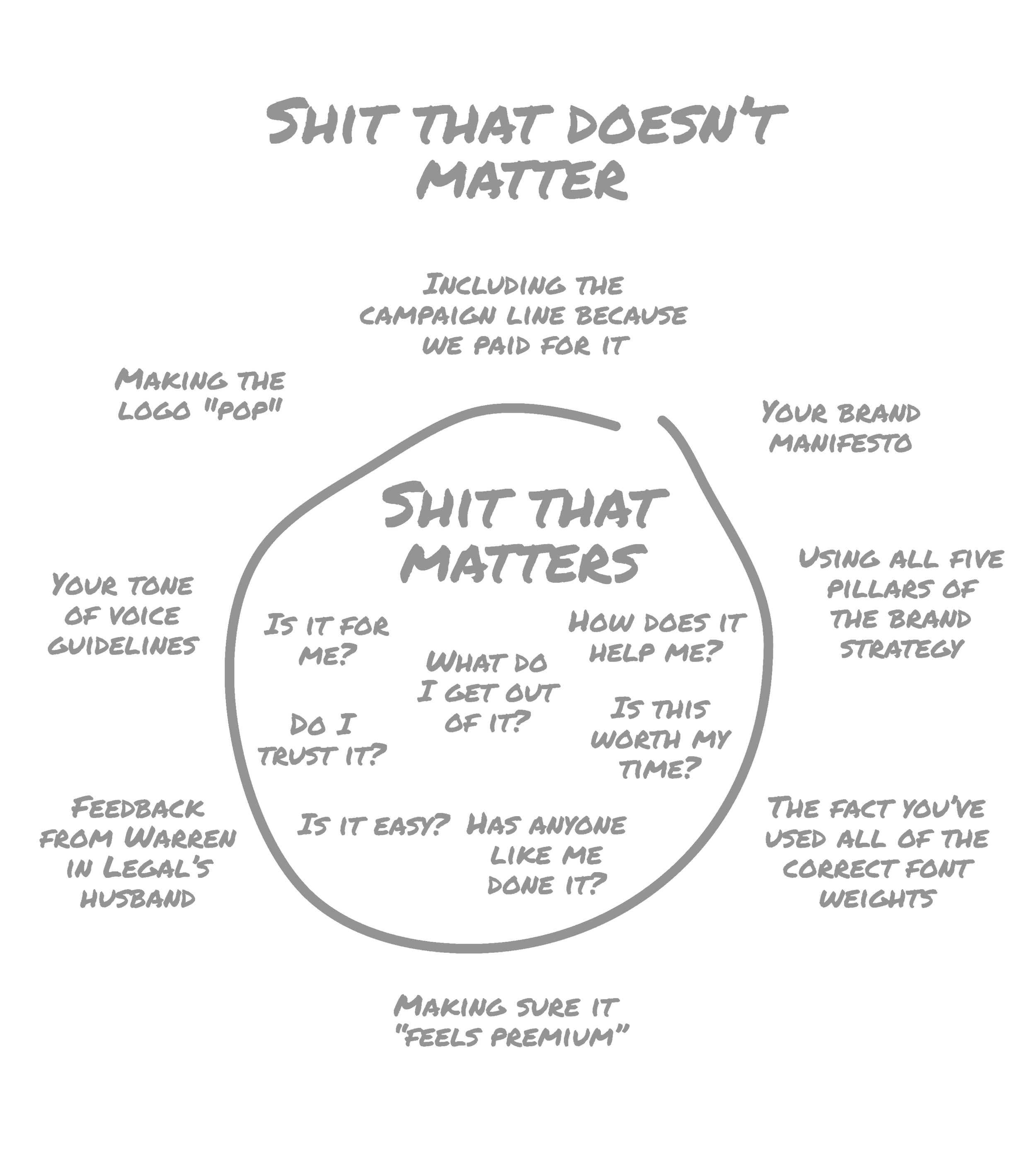
Everyone who writes, designs and approves your communication is paid to care about your brand.
The prospect isn’t. So the work gets judged by people who are unkowingly biased — and signed off because it looks right, not because it works.
I call this the Value Trap. And I help later-life needs-based brands get out of it.
NO ONE CARES
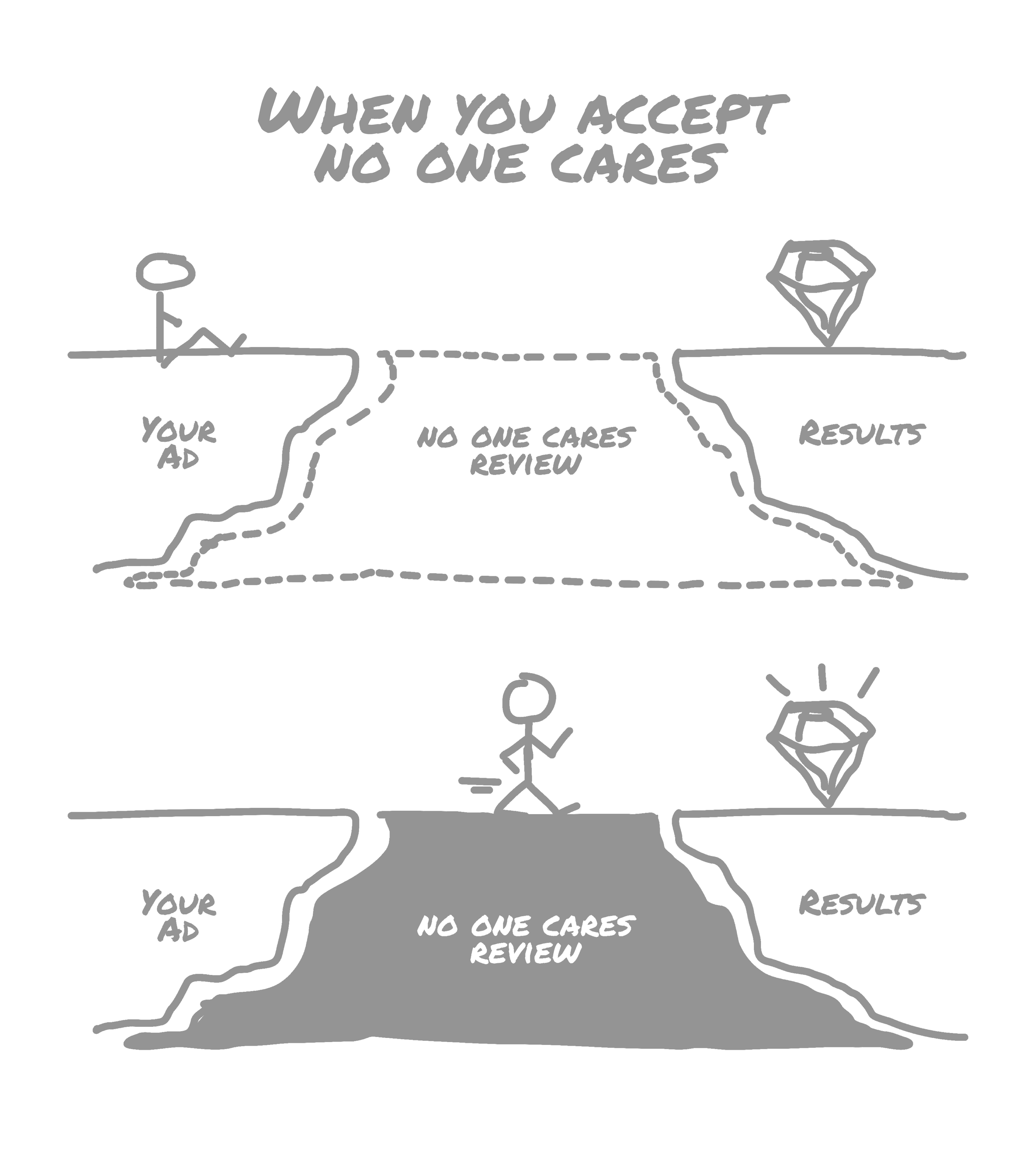
My approach is built around a simple idea: No One Cares.
Not because people don’t care about anything. Because they don’t care about your business simply because you want them to.
You have to earn their attention by communicating value from their point of view. I’ve spent more than 20 years in direct response, testing how changes in message, argument, structure and creative affect what people actually do.
The No One Cares Framework distils that into four simple questions:
-
Can someone who doesn’t want to read your door drop and who's never heard of your brand get who you are and what you do within two seconds of picking it up?
Because if the layout makes it hard for them to scan — guess what — they won’t.
-
Does your door drop build a sales argument that makes it very hard for the reader to say no? One that works with how people naturally process a decision — not how your brand wants to tell the story?
Because if you launch into what you think is great about your products or services you’ve already lost them.
-
Are you using social proof, scarcity, urgency, trust, and credibility to give fence-sitters a reason to act now — not later?
Because trust me there’s way more fence-sitters out there than people ready-to-buy, so give them every reason to think taking action is a good idea.
-
Are you starting with a problem your reader actually has — one they recognise and want to fix? Not your problem. Theirs. Because if they can’t see themselves in the first two seconds, your door drop is worth nothing to them. This is where 90% of later-life creative falls down.
WHERE IT STARTS
Sometimes this starts with one underperforming piece of acquisition creative.
Sometimes it exposes a much bigger communications problem. Either way, the question is the same:
Are you communicating what your business values, or what your audience does?
If you don't know, your door drop does.
BRANDS THAT GOT OUT OF THE VALUE TRAP











“I’ve finally got a creative person who talks my language.”
— Matt Day, Homewise
“On QR redemption alone — £140k+ in sales — the door drop test paid for itself.”
— Jack Coy, Tapi Carpets & Floors
“Best performing door drop campaign we’ve ever run.”
— Paula Pickering, Sussex Beds
START HERE FREE
A recorded presentation that changes how you judge door drop creative. See the Value Trap exposed in real creative. Understand how the framework fixes it. You’ll never look at a door drop the same way.
Agencies and Partners I Work with and support







Book a 30-minute call
Tell me about the business and what your acquisition looks like. If you’ve got a recent piece of creative — a door drop, a mailer, an insert — bring it, and I’ll give you 5 things to fix on your next campaign. No charge.