
324% uplift in ROI
The problem
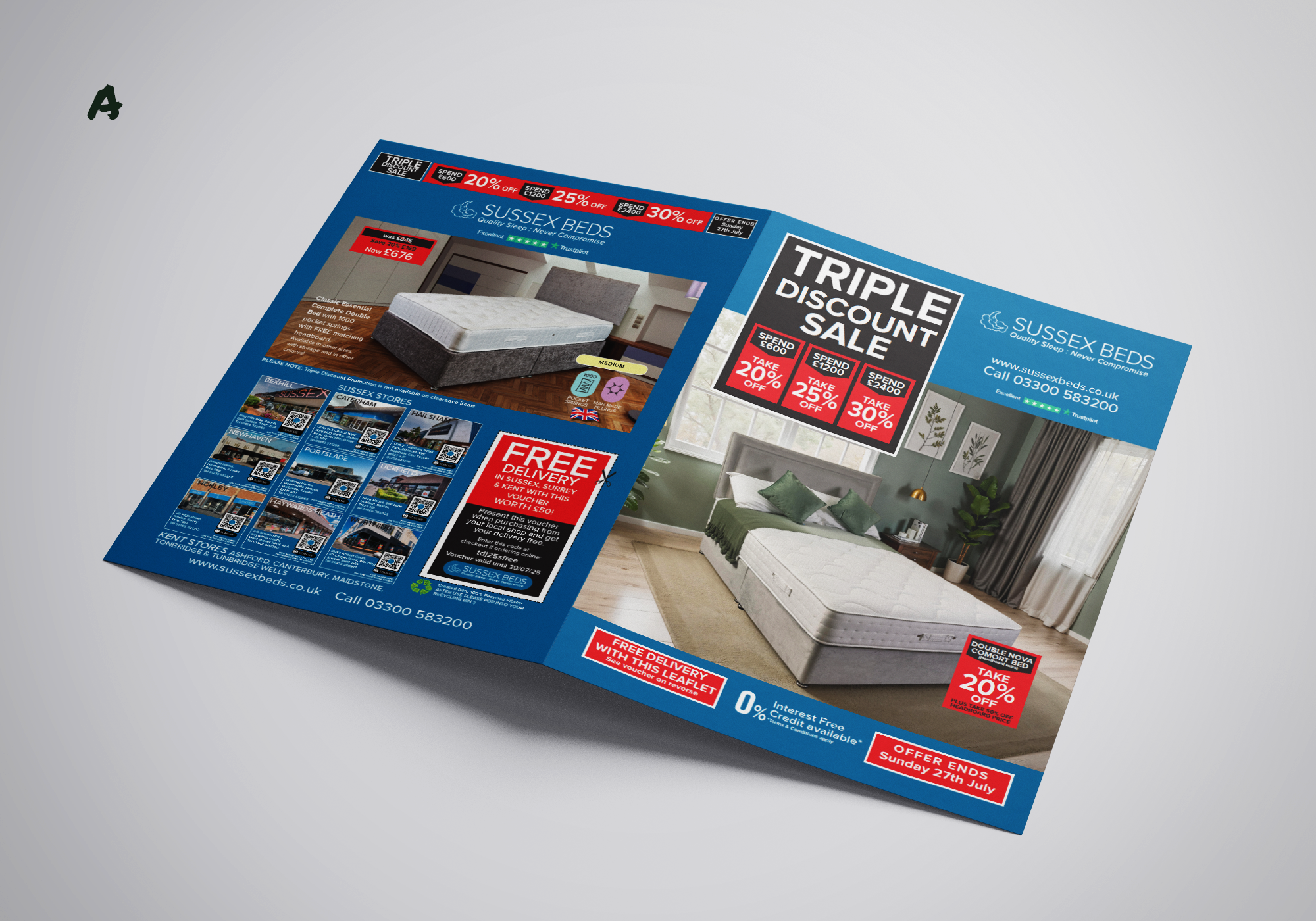
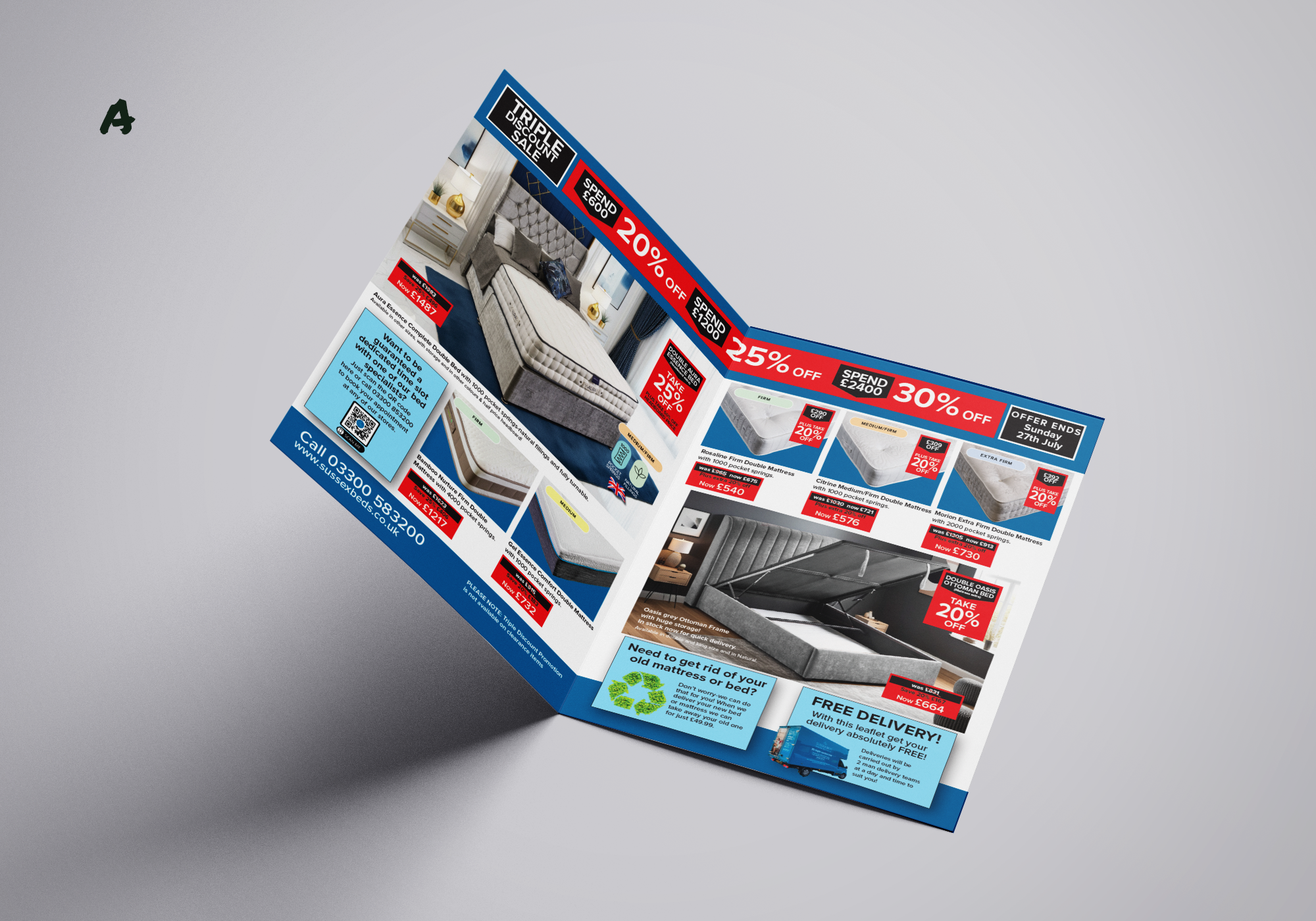
Sussex Beds' door drop was doing what most retail creative does — leading with discounts, product shots, and prices. It looked like every other bed advert that lands on a doormat. The reader's brain filed it under "another company that wants my money" and moved on.
What the framework fixed
Clear: Too many competing elements fighting for attention — multiple offers, QR codes, storefront images, combined vouchers. No clear visual hierarchy telling people where to look first, second, third. The reader had to work too hard to figure out what to do.
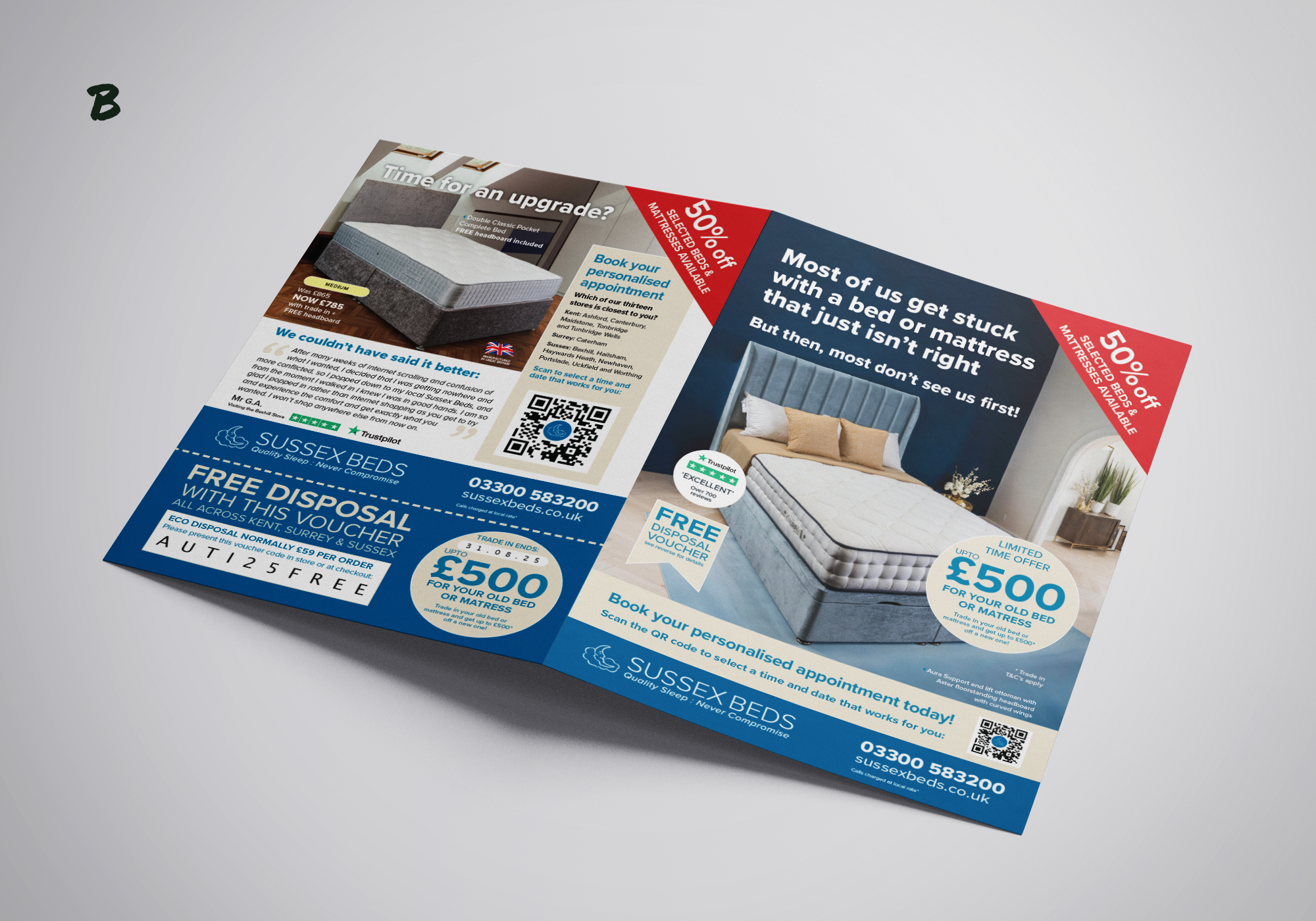
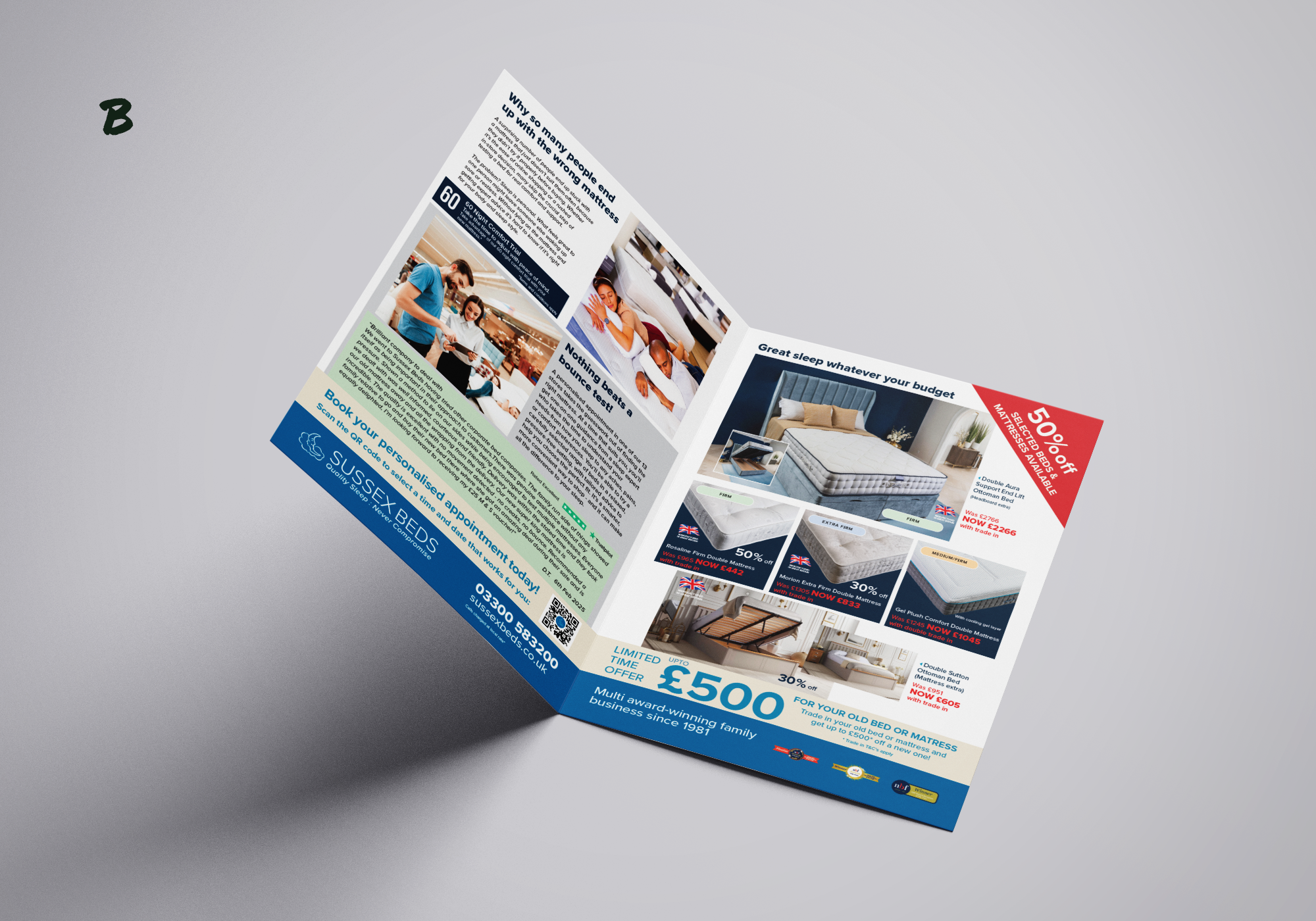
Organised: The control launched straight into the offer — discounts, percentages, prices. No sales argument. The test opened with a problem the reader already felt: most people end up with the wrong bed. Then built the case for why booking an appointment was the smarter way to buy.
Persuasive: The control relied on discounts to do all the heavy lifting. The test reframed the decision around confidence — loss aversion, social proof with named testimonials, and credibility as a family-run local specialist. The incentive became the reward for acting, not the reason to act.
Valuable: The control communicated what Sussex Beds valued — their sale, their prices, their finance options. The test communicated what the reader valued — not making a decision they'd regret. It positioned the in-store appointment as the way to feel confident, not just the way to get a discount.
The result
324% uplift in ROI — from 0.87 to 3.69. The control was losing money. The test turned the same leaflet into the best performing door drop campaign Sussex Beds had ever run.
"Best performing door drop campaign we've ever run." — Paula Pickering, Sussex Beds