
Response rate doubled
The problem
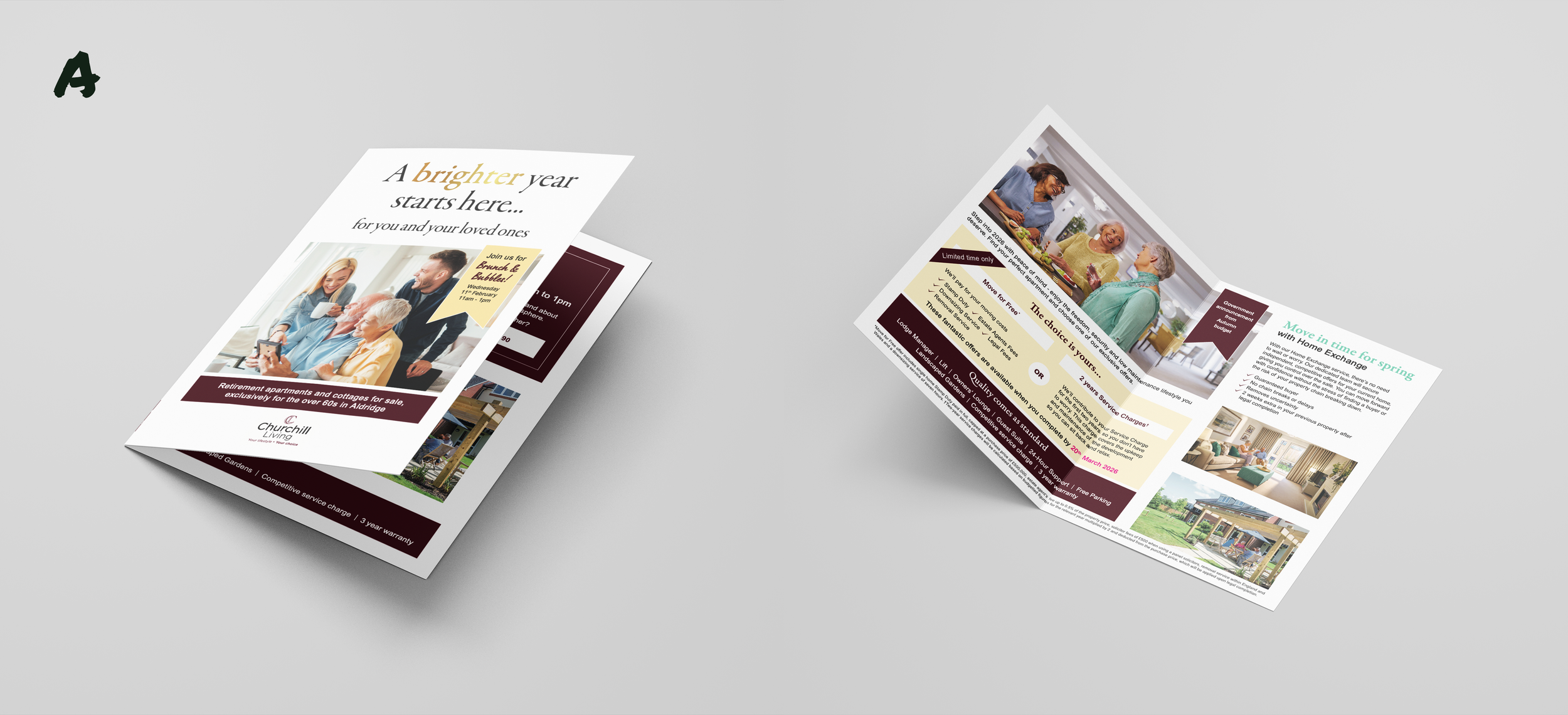
Churchill Living's door drop was clean, professional, and on brand. But it was doing what most later-life creative does — talking about itself. Awards, features, history. The reader had to work out for themselves whether this was worth their time. Most didn't bother.
What the framework fixed
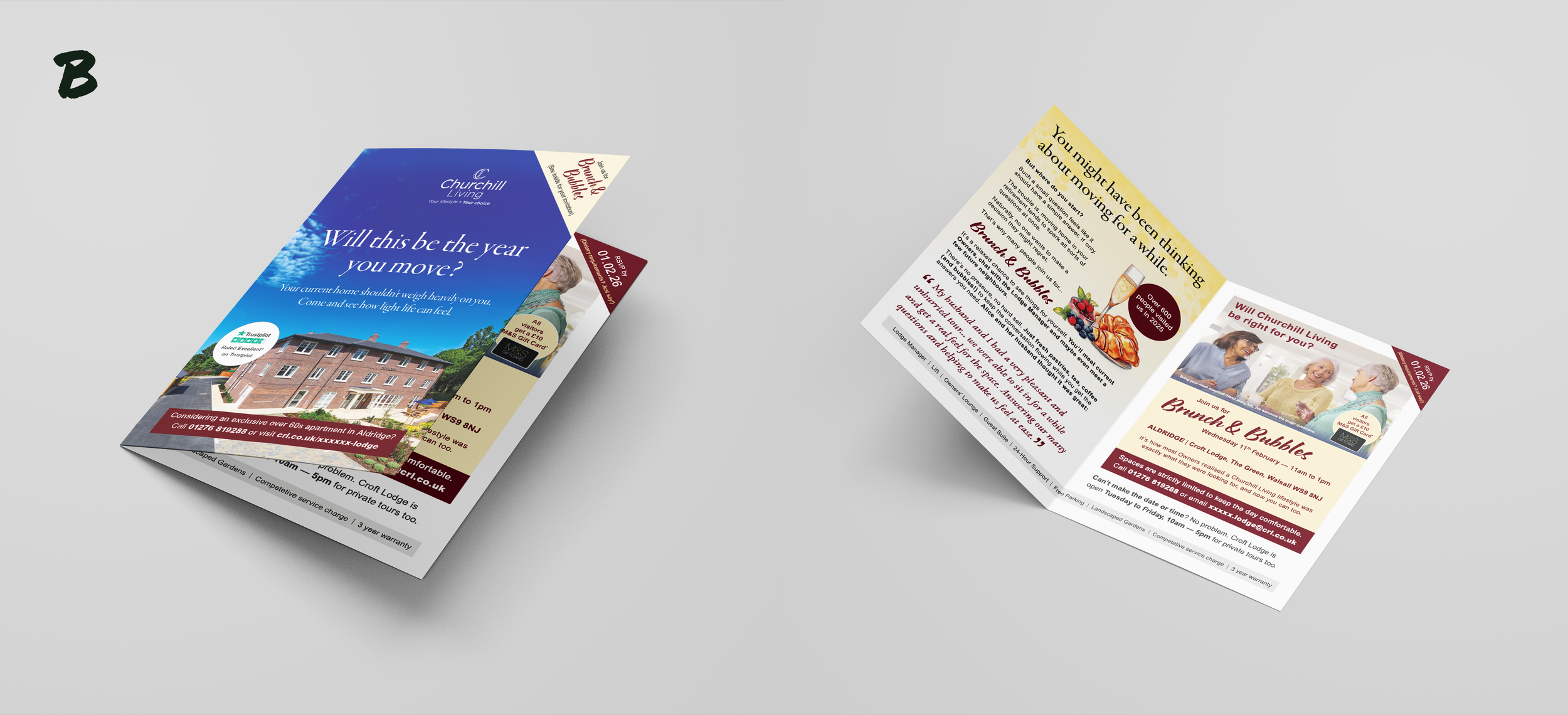
Clear: The property image — the thing they were actually selling — was tucked away at the back in a tiny frame. Meanwhile, a staged stock photo of a family dominated the front. The test put the actual development on the front cover and removed the stock photography entirely.
Organised: The control headline led with the brand: "A brighter year starts here." The test led with a question the reader was already asking themselves: "Will this be the year you move?"
Persuasive: The testimonial was from someone who'd already bought and was living their best life — too far ahead in the journey. The test used a testimonial from someone who'd just visited: relatable, low-commitment, and exactly where the reader was right now.
Valuable: The control scattered competing messages across the piece — visit us, RSVP, claim a gift card, call this number, call that number. The test built a single sales argument around one action: come to brunch and bubbles, see for yourself, no pressure.
The result
Response rate doubled. Same targeting. Same audience. Same brand. The only thing that changed was how the creative communicated.